All case studies

Adelaide City General Practice eliminates single point of failure with cloud migration

An AGPAL-accredited Adelaide CBD medical centre eliminated a single-server point of failure by migrating Medical Director and clinical systems to AWS, with Microsoft 365, DUO MFA, and Essential Eight ML1.

Powered by Calendly — your data is handled securely.

More case studies
Industry
Healthcare
Team size
~19 (16 doctors + 3 support staff)
Location
Adelaide CBD, SA
Plan
Fortress
Platform
AWS + Microsoft 365

Meet the client

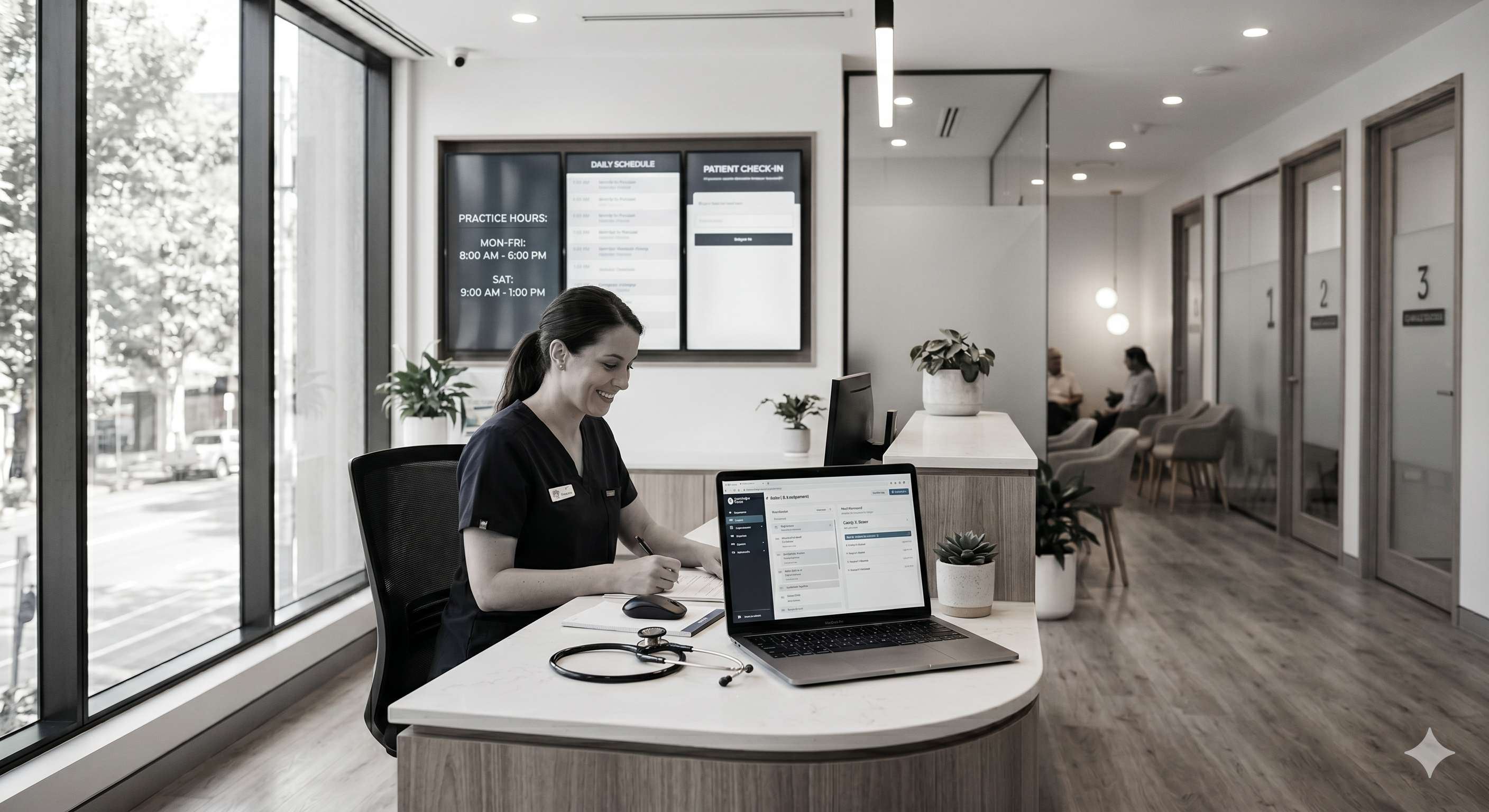
Adelaide City General Practice is an AGPAL-accredited medical centre in the heart of Adelaide's CBD, operating from Level 2, 29 King William Street. With around 16 doctors and 3 support staff, they provide comprehensive general practice services alongside on-site SA Pathology collection and psychology. Their priority is delivering excellent physical, mental and emotional care to patients of all ages and backgrounds — and that depends on reliable, uninterrupted access to patient records and clinical systems.

What they were up against

External

The practice ran its Medical Director practice management software on an on-premise server. While it had redundant power supplies and hard drives, the physical motherboard remained a single point of failure. If it failed, patient records would be inaccessible for at least a full business day — and realistically longer once parts were sourced and shipped under warranty. Beyond reliability, the server had hard limits on scalability. Adding RAM, storage or processing power was expensive, time-consuming, and capped by the physical hardware. Software licensing was another burden — on-premise meant purchasing full licences upfront rather than paying for what was actually used. The server also consumed power and required ongoing physical maintenance.

Internal

This created a persistent anxiety: the practice's ability to see patients hinged on a single piece of hardware sitting in an office. Doctors had no practical way to access patient records remotely, limiting flexibility for after-hours recordkeeping and follow-ups.

A healthcare provider shouldn't have to worry that one hardware failure could take their entire practice offline. Patient care deserves infrastructure that's resilient, flexible, and secure.

How we stepped in

Otaris understood the stakes — in healthcare, system downtime doesn't just cost productivity, it affects patient care. With experience migrating clinical environments to the cloud and implementing Essential Eight cybersecurity frameworks, Otaris had the expertise to move the practice off its ageing server without disrupting day-to-day operations.

What we delivered

  1. Cloud migration to AWS

    Migrate Medical Director and all practice data to Amazon Web Services (EC2, S3, VPC, CloudWatch), replacing the on-premise server entirely.

  2. Microsoft 365 deployment

    Roll out Outlook, Teams, SharePoint and OneDrive for communication, collaboration and document sharing across the practice.

  3. Essential Eight Maturity Level 1 cybersecurity framework

    Implement risk assessments, security controls, data protection policies and incident response procedures to meet healthcare compliance requirements.

  4. Secure remote access with DUO MFA

    Enable multi-factor authentication across all remote access points so doctors can securely manage patient records from any location.

  5. Business continuity, DR and NOC monitoring

    Establish regular backups, a comprehensive disaster recovery plan, and 24/7 network operations centre monitoring for proactive issue detection.

The cost of inaction

Without action, the practice was one motherboard failure away from losing access to patient records for days. In a healthcare setting, that means cancelled appointments, delayed diagnoses, and potential compliance breaches with patient data regulations. The on-premise server was also consuming power and requiring ongoing maintenance — costs that would only increase as the hardware aged. Doctors remained tethered to the office with no secure way to work remotely.

Before and after

Before
After
  • Single on-premise server — motherboard failure = 1+ days downtime
    AWS cloud infrastructure with built-in redundancy and uptime SLA
  • Fixed capacity — expensive, slow upgrades capped by physical hardware
    Scalable compute, RAM and storage — adjust up or down as needed
  • Upfront software licences purchased outright
    Pay-as-you-go cloud licensing — only pay for what you use
  • No remote access for doctors
    Secure remote access via DUO MFA from any location — doctors can manage patient records from outside the office
  • No formal cybersecurity framework
    Essential Eight Maturity Level 1 with full incident response procedures
  • Server in office consuming power, requiring maintenance
    No on-site hardware — reduced power costs and maintenance burden

Where they are now

The single point of failure is gone. Adelaide City General Practice now runs on AWS infrastructure backed by Amazon's uptime SLA, with the ability to scale compute, memory and storage on demand.

Crucially, doctors can now securely access patient records from outside the office through DUO MFA-protected connections — enabling after-hours recordkeeping and remote consultations without compromising security. The practice operates under a full Essential Eight Maturity Level 1 cybersecurity framework with proactive 24/7 NOC monitoring, and a tested disaster recovery plan ensures business continuity in the event of any incident.